 For more information contact Dolphin Mobility on 01276 856060.

A blog about mobility products and aids for disabled people. Featuring news articles, guides for end users and comment on the mobility aids industry. For more information on any of the featured products please call 0800 9800 126.
Tuesday, September 30, 2008
Oxford Ascend Hoist
With its unrivalled range of movement, the Ascend can transfer a patient from a low-seated position to fully extended with ease. Its active lifting motion was specially designed to encourage user participation, which ultimately promotes patient independence and well-being.
 For more information contact Dolphin Mobility on 01276 856060.
For more information contact Dolphin Mobility on 01276 856060.


Oxford Arise Patient Lift
The Arise was specifically designed for quick, simple and safe transfers. Unlike using conventional passive lifting devices, the Arise supports using a range of active slings. This encourages the patient to participate during the lifting process. This active style of transfer is proven to keep patients active for longer. Slings are simple to fit, provide excellent access and support for the key tasks of toileting, standing, walking and quick transfers.
 For more information contact Dolphin Mobility on 01276 856060.
 For more information contact Dolphin Mobility on 01276 856060.
Oxford Advance Patient Lift
The Advance patient lift from Oxford represents a true step forward in patient lift design and performance. It uses the very latest design and manufacturing technologies to ensure the Advance is the most functional and stylish lift in its class today.
 For more information contact Dolphin Mobility on 01276 856060.
 For more information contact Dolphin Mobility on 01276 856060.
Oxford Presence lift
The Oxford Presence lift has been engineered and designed to handle almost any resident-handling task. With its outstanding lift range, the Presence can lift residents from the floor as well accommodate transfers to higher surfaces. The 500 pound safe working load and greater spatial area make this lift a perfect fit for larger residents.

For more information contact Dolphin Mobility on 01276 856060.

For more information contact Dolphin Mobility on 01276 856060.
Oxford Stature Patient lift
The Stature patient lift, Oxford's flagship product, recognises the true needs of the modern care environment.

With a massive safe working load of 227kgs/500lbs/36st and one of the largest lifting ranges available (min 390mm max 1550mm), the Stature is able to cope with even the most demanding and technical of patient handling situations.
For more information contact Dolphin Mobility on 01276 856060.

With a massive safe working load of 227kgs/500lbs/36st and one of the largest lifting ranges available (min 390mm max 1550mm), the Stature is able to cope with even the most demanding and technical of patient handling situations.
For more information contact Dolphin Mobility on 01276 856060.
Spa Pool Lift
The Splash! Spa pool lift is designed for use with spas up to 52” (132 cm) above ground level.

The Spa lift is attached to the pool deck using a square anchor socket. The Splash! is virtually maintenance free. The components are made from corrosion-resistant materials, including powder-coated aluminum (arms, housing), and powder-coated stainless steel (base, mast, and seat frame). The unique seat of the lift was specifically designed to provide the user with the greatest possible comfort and ease of transfer.
For more information contact Dolphin Mobility on 01276 856060.

The Spa lift is attached to the pool deck using a square anchor socket. The Splash! is virtually maintenance free. The components are made from corrosion-resistant materials, including powder-coated aluminum (arms, housing), and powder-coated stainless steel (base, mast, and seat frame). The unique seat of the lift was specifically designed to provide the user with the greatest possible comfort and ease of transfer.
For more information contact Dolphin Mobility on 01276 856060.
Council takes over home repairs from 'slow' agency
According to the council, the work of the South Notts Home Improvement Agency did not meet expectations and was not carried out in time.
From tomorrow all jobs that have not yet been started within Gedling borough will be done by the council itself.
The housing agency will complete all jobs where work has already begun, at no cost to Gedling Borough Council.
The agency, run by housing association Spirita, helps elderly, vulnerable and disabled residents with house repairs as well as installing ramps, heating systems and stair lifts.

In February, the group was told its contract would be extended if its service improved.
But a report by council officers states: "At the beginning of June 2008 it became evident Spirita was not adequately addressing the issues specified and it was mutually agreed to terminate the contract on September 30."
The South Notts Home Improvement Agency was set up in 2005 to help people living in private homes in Gedling, Rushcliffe and Broxtowe.The agency was given £230,000 of public money for home improvements. But in March 2008 Broxtowe withdrew its funding.
It criticised the agency for delays in carrying out work after receiving an initial enquiry, the quality of technical assessments and the costing of work.
A Spirita spokeswoman said: "We have worked positively and pro-actively with Gedling Borough Council to ensure a smooth handover and we continue to support our clients and handle all the work already underway."
sarah.firth@nottinghameveningpost.co.uk
Monday, September 15, 2008
New pool lift for Ringwood swimmers
Swimmers in Ringwood are delighted with the new BluOne portable pool lift supplied by Dolphin, and are hoping it will encourage more disabled people to take the plunge at their swimming pools.

The above image shows Craig Dunnage, second from the left and Dolphin Mobility's Managing Director, demonstrating the new lift at Ringwood Health and Leisure Centre.

The above image shows Craig Dunnage, second from the left and Dolphin Mobility's Managing Director, demonstrating the new lift at Ringwood Health and Leisure Centre.
Stair Lifts - Prices
Most stairlift companies are reluctant to give you a price on their website or over the phone.
Dolphin Stair Lifts have a stairlift prices calculator on our website where you can quickly get a price online by answering a few simple questions about your staircase. All you'll need is a tape measure, pen and a sheet of paper.
Dolphin Stair Lifts have a stairlift prices calculator on our website where you can quickly get a price online by answering a few simple questions about your staircase. All you'll need is a tape measure, pen and a sheet of paper.
Friday, September 05, 2008
Housing: the age-old problem
The following article was taken from www.contractjournal.com, the site for construction industry news.
Growing old isn't something that many of us like to think about. Except perhaps for the odd 10 minutes when we're looking in the mirror in disbelief that we're actually turning into our parents. Sadly, however, the fact remains that for those of us fortunate enough to make it, old age is a reality.
As a population, we're aging at an incredible rate. The average age in the UK now stands at approximately 39 years, compared to 34.1 years in 1971. Furthermore, by 2026, older people will account for almost half of the increase in the total number of households - resulting in an additional 2.4m older households than there are today. It's essential, therefore, that Housing Associations ensure that the dwellings they provide are able to accommodate a changing society - and for too long they haven't.
Elderly and disabled individuals living in social housing often find it difficult to move around their homes, make a cup of tea or bath themselves properly, and as a result, injuries or accidents often occur. A quick look at government statistics further illustrates the problem, with older peoples' falls resulting in 1.25m hospital admissions per year, at a cost to the NHS of around £750m. Safety modifications and adaptations are thought to be able to massively reduce that figure, with some analysts claiming that they could be reduced by as much as 60%. Or to put it another way, cut costs by about £400m.
Sixteen-point plan
In February this year, communities minister Hazel Blears announced that from 2011, all social housing must be designed and built to meet the '16 point' Lifetime Homes standard (see box, opposite). By putting its own house in order first, the government is hoping that the private sector will follow suit. If it fails to do so, by 2013 regulations will be introduced to make the standards compulsory throughout the UK.
The Lifetime Home Standards were first developed and promoted by Habinteg Housing Association and the Joseph Rowntree Foundation during the late 1980s. They were based on the idea that new dwellings should be designed in such a way that they are suitable for people throughout their lives and particularly as they enter old age. The Standard covers things such as wider doorways for wheelchair access, and entrance level living rooms. It also requires all housing to be accessible and easily adaptable to help people cope with disabilities.
While some may argue that this is simply another hurdle introduced by the government, making it yet harder to build the much needed social housing in the UK, Paul Cann, director of policy and external relations at Help the Aged, welcomes the idea: "This strategy is enormously important. Housing is the backbone of older people's quality of life, affecting their health, well-being and independence."
"Older people often tell us that they want to live in their own homes for as long as possible, but due to poor designs, they're unable to do so. This strategy will hopefully ensure that in the future, elderly people have the option to choose."
Lifetime neighbourhoods
The new standards form part of a wider initiative launched by the government called Lifetime Neighbourhoods. These are designed to ensure that in the future cities are constructed in such a way that they are able to accommodate the requirements of an aging population. Working in conjunction with planners and design experts, the scheme will address common design faults believed to be responsible for the growing number of elderly people that feel trapped in their own homes. These include the lack of disabled parking bays, public toilets, well located bus stops, as well as better street lighting and kerb design.
There are plans to role out the first 'age-friendly' cities across the 10 nationally planned eco-towns and the Olympic Village. If the project proves to be successful, it is certain to set a precedent for other cities across the developed world.
To support both the Lifetime Homes and Lifetime Neighbourhoods programmes, a £33m fund has been allocated for essential repair and adaptation work to begin on social housing dwellings. This coupled with a £460m 'Disabled Facilities Grant' for changes such as installing stair lifts and walk in showers will, according to the government, "help people stay mobile and live independently for longer".
Cann continues: "We're delighted the government is addressing the challenges facing the day-to-day lives of the older population. The commitment to providing housing advice, repairs and adaptations today, will mean that for the first time, older people who want to continue to live independently are better equipped to do so."
Constructing for life
In principle, this all sounds ideal. After all, it shouldn't be too much to ask that after decades of working hard and paying taxes, our elderly population should wish to keep their dignity and independence and continue to live comfortably in their own homes. The question is, however, is a one-size-fits-all approach to social housing really the solution? Or is this simply a knee-jerk reaction to an ageing population and the spiralling maintenance costs facing the government?
"In theory, the Lifetime Homes Standard is a good thing," says Marcus Keys, affordable housing director at Mansell. "There's simply no point in building homes that you then have to modify later down the line. This is about building homes of the future, today.
"Where housing providers need to be careful, though, is in ensuring that we don't end up in a situation whereby you have a single elderly person occupying a four-bedroom house, because her children moved on a long time ago. In that situation, you have to ask yourself, is this really the best use of space?"
Jon Rukin, Framework Manager at Rok, agrees. "The Lifetime Home philosophy is ethically and socially sound, but perhaps financially flawed," he says. "If you invest extra money building homes to this standard and only actually end up modifying a quarter of them, it doesn't demonstrate a good return on investment."
So the population is aging, the market is changing and as a result, we need to change the way we go about building our homes. In the private sector, the standards have come under particular scrutiny. Some contractors have argued that the standards are not a necessity and that the extra costs make it harder for first-time buyers to get on the market. So what does all this mean for the social housing contractor?
"Little change really," explains Keys. "This is something that we and a number of the major contractors have been doing for a long time already. As long as the requirements are considered in the design stage, there should be no additional cost to the contractor. The important part is ensuring that the supply chain is integrated within the design team."
Implementation costs
For contractors that don't already comply with the standards, the transition may not be so smooth. Especially given that the cost of implementing the Lifetime Homes standards varies dramatically. The Chartered Institute of Housing in Northern Ireland and the Joseph Rowntree Foundation conducted a comparative study into the cost of meeting Building Regulations and Lifetime Home standards. According to that study, the additional cost of building Lifetime Homes ranged from £165 to a maximum of only £545 per dwelling, depending on the size, layout and specification of the property.
But Rukin believes this is a gross underestimate. "'Typically, we have found that it can add anything up to extra £3,000 onto the cost of construction, depending on the size and layout of the dwelling. It's a lot easier to implement on larger properties, but for the smaller properties it can be more challenging as you can't physically make a house bigger."
So, while the private sector may not have taken to the new standards quite so well, social housing contractors are more welcoming to the plans. Maybe that's because for most the new standards have been incorporated into their day-to-day operations for some time. Or maybe it's because when working for the Government, the additional cost of construction is less important.
One thing is for sure, though. Any scheme designed to improve the quality of life for society should be welcomed, particularly when such simple steps can make a huge difference. Only time will tell if it's to be a success or not, but with the 2012 Olympics looming and London the centre of attention, it will be interesting to see if the scheme proves a winner or if it falls at the first hurdle.
New dwellings should be designed to suit people of all ages.
Lifetime Homes form part of a wider initiative - Lifetime Neighbourhoods - which aims to address common design faults.
£10 million plan to fix city lifts
By Lawrence Marzouk, Local Government Correspondent - The Argus
Every lift in council properties is to be replaced and refurbished as part of a £10 million plan.
Brighton and Hove City Council’s housing cabinet member meeting is expected to approve the investment next Wednesday.
The news comes after paramedics treating a sick pensioner had to be freed by firefighters after they were trapped in a lift.
The drama unfolded at the Leach Court sheltered flats in Kemp Town, Brighton, where lifts have been regularly out of action in the last year.
An 88-year-old man with a history of heart problems was taken ill on Friday afternoon and was helped into the lift in a wheelchair by paramedics.
But the lift became stuck and firefighters were called to free the patient and paramedics.
Maria Caulfield, the council's cabinet member for housing, said the situation was unacceptable.
The current contract provides for routine service and minor repairs but individual bids have to be made for each major piece of work.
Tuesday, September 02, 2008
Home improvements loan for over 60s
This article appeared on the Maidenhead Advertiser website.
The over 60s are being offered home improvement loans by the borough to keep people comfortable and secure in their homes.
The over 60s are being offered home improvement loans by the borough to keep people comfortable and secure in their homes.
The scheme, being introduced by the Royal Borough and 17 other local authorities across Berkshire, Buckinghamshire, Oxfordshire and Surrey, provides loans to the over 60s to improve the warmth, comvort or security of their homes.
This could include work to central heating, improving insulation, installing a stairlift or essential repairs, among others.
Cllr Alison Knight, the borough's cabinet member for planning and housing, said: "We have created a loan to help residents remain in a well-maintained home during their retirement – and have peace of mind – while paying off as little or as much of the loan as they like each month.
"It is important to us that the loan is equal or superior to products available from other lenders in terms of interest rates, charges, efficiency and especially flexibility."
For further information on the scheme, call 01628 683820.
Splashing out on pool lift for disabled swimmers
The following article is taken from the New Forest District Council website. The pool lift was supplied by Dolphin Mobility.
DISABLED swimmers are making waves at Ringwood Health and Leisure Centre with the introduction of a new pool lift.

Swimmers who found difficulty accessing the pool using the old-style hoist are delighted with the £5,000 Italian-imported equipment which has now been installed.
New Forest District Council purchased the BluOne portable pool lift, only recently available in Britain, in a bid to encourage more disabled people to take the plunge at their swimming pools.
"We were aware that the old-style hoist was not liked as disabled swimmers had to be strapped in. Some people didn't like asking for help as two members of the pool staff had to manage the equipment," said NFDC's Portfolio Holder for Employment, Health and Wellbeing, Cllr Maureen Holding.
"We want more disabled people to enjoy the benefits of swimming and have invested in this modern, lightweight and easy-to-use pool lift with great success.
"Swimming gives better health and mobility to disabled people and therefore it is very important for them to participate in this activity," said Cllr Holding.
Now only one staff member is needed to operate the lift and disabled users can be gently lowered into the water where they can easily slide off the seat and enjoy a swim.
Joan Cundill, a disabled swimmer, was invited to the Ringwood centre to try out the equipment.
She said afterwards: "The new hoist is a great improvement on the old one, both for the passenger and poolside staff."
NFDC Equalities Officer Helena Renwick would like feedback from swimmers now using the pool lift.
"If people tell us they like it, we can put it in other centres," she said.
Helena can be contacted on 023 8028 5560 or by email helena.renwick@nfdc.gov.uk
For more information please visit the BluOne pool lift product page on our main site or check out one of our pool lifts video's on youtube.
Friday, August 08, 2008
Half of Derby museum out of bounds to disabled people after lift is switched off
DISABLED people cannot access half of Derby's Museum and Art Gallery because a stair lift has been condemned.
Derby City Council said the lift, which helps people reach the upper levels of the museum, including the Joseph Wright collection, could no longer cope with the demands on it.
The council said the weight of some of the wheelchairs now being used by disabled people had become too much for the lift.
It was turned off a week ago but the lack of access was only highlighted after John and Helen Winson, of Dovedale Avenue, Long Eaton, tried to visit the museum.
Mrs Winson, 51, uses a battery-powered wheelchair because she has two artificial legs.
Click here!
She said: "We had been to the museum before but I wanted to go again to see the changes to the Egyptian exhibition.
"I could access the ground floors and one of the lifts was working to part of the building but when we went to use the stair lift, we were told by staff that they were very sorry but the lift had been condemned by the council. I was really disappointed because I couldn't get to the exhibition I had really come to see and we just had to leave."
A spokeswoman for the council said it was looking to replace the lift with a better one.
She said: "A structural engineer will visit the museum this week because we want to replace the lift with a better platform type of lift which will be easier for people to use.
"Before installing that, we need to look at the site because it is very structural work.
"We don't know at the moment how much that could cost and how long it could take but we will get the work carried out as soon as possible."
The council said it could be around a month before disabled people would be able to access the remainder of the museum.
Martin Austin, managing director of Derby firm Nimbus, which provides advice to companies and organisations about providing access for disabled people, said health and safety had to come first.
"Derby City Council is usually proactive about access issues and I am sure they are assessing it now," he said.
"Although not having access is not ideal, health and safety has to come first and I am sure people would prefer not to be able to access part of a building for a short time rather than use equipment which could potentially be dangerous.
"The Disability Discrimination Act means the authority has to provide a replacement within a reasonable amount of time and I hope they are able to provide a new lift as soon as possible."
Derby City Council said the lift, which helps people reach the upper levels of the museum, including the Joseph Wright collection, could no longer cope with the demands on it.
The council said the weight of some of the wheelchairs now being used by disabled people had become too much for the lift.
It was turned off a week ago but the lack of access was only highlighted after John and Helen Winson, of Dovedale Avenue, Long Eaton, tried to visit the museum.
Mrs Winson, 51, uses a battery-powered wheelchair because she has two artificial legs.
Click here!
She said: "We had been to the museum before but I wanted to go again to see the changes to the Egyptian exhibition.
"I could access the ground floors and one of the lifts was working to part of the building but when we went to use the stair lift, we were told by staff that they were very sorry but the lift had been condemned by the council. I was really disappointed because I couldn't get to the exhibition I had really come to see and we just had to leave."
A spokeswoman for the council said it was looking to replace the lift with a better one.
She said: "A structural engineer will visit the museum this week because we want to replace the lift with a better platform type of lift which will be easier for people to use.
"Before installing that, we need to look at the site because it is very structural work.
"We don't know at the moment how much that could cost and how long it could take but we will get the work carried out as soon as possible."
The council said it could be around a month before disabled people would be able to access the remainder of the museum.
Martin Austin, managing director of Derby firm Nimbus, which provides advice to companies and organisations about providing access for disabled people, said health and safety had to come first.
"Derby City Council is usually proactive about access issues and I am sure they are assessing it now," he said.
"Although not having access is not ideal, health and safety has to come first and I am sure people would prefer not to be able to access part of a building for a short time rather than use equipment which could potentially be dangerous.
"The Disability Discrimination Act means the authority has to provide a replacement within a reasonable amount of time and I hope they are able to provide a new lift as soon as possible."
Thursday, July 31, 2008
Oxford Voyager Portable Hoist
Dolphin Mobility are delighted to announce the addition of the Oxford Voyager range of hoists, to their product portfolio.
The Voyager Portable & Easytrack combine to form a unique portable overhead lifting solution for the home or care environment.

The Voyager Portable is lightweight (5.5kg/ 12 lbs with battery) which allows the use of one unit for several rooms (with Voyager fixed or Easytrack rails). Convenient carry handles allow easy transfer of lift.
The Voyager Portable & Easytrack combine to form a unique portable overhead lifting solution for the home or care environment.

The Voyager Portable is lightweight (5.5kg/ 12 lbs with battery) which allows the use of one unit for several rooms (with Voyager fixed or Easytrack rails). Convenient carry handles allow easy transfer of lift.
Tourism For All
Tourism for All is a national charity which aims to be the centre of expertise on accessible tourism. They publish a guide to easilt accessible places to visit in Britain.
https://www.tourismforall.org.uk/New-Easy-Access-Britain-Guide-Offers.htm
https://www.tourismforall.org.uk/New-Easy-Access-Britain-Guide-Offers.htm
A new guide has been launched by Visit London with information on over 800 accessible hotel rooms in the capital.
The guide, which is based on an independent audit of every hotel, describes the visit from arrival by car or public transport to reception, the restaurant, other public areas and the rooms and bathrooms.
Disabled 'face long wait for home works'
Government guidelines say the maximum time for a low-priority case to be dealt with should be 52 weeks.
But a snapshot survey of 30 recent cases in Hull has revealed a third failed to hit that target.
The longest took just over 70 weeks from the start of the assessment process to the work being finished.
Typically, adaptations range from grab-rails and stairlifts to ramps and disabled toilet facilities.
Most are carried out to allow people to remain living at home rather than moving into residential care.Mark Baggley, chairman of the Hull Choices and Rights Disability Coalition, said: “I am not surprised by the figures because it really is a massive problem which, unfortunately, isn't really known about.
“I know of one couple who have been together 50 years, but because one of them has been in hospital and their home requires adaptations, they have lived apart for the past eight months because the house had yet to be adapted.”
Mr Baggley said a shortage of occupational therapists and building surveyors were among the reasons behind the delays.
But he added: “The biggest factor is that most of the city's housing stock is just not suitable.”
John Hocking, the council's housing director, who deals with disabled adaptations, said: “We have a fast-track system for people in greatest need, but we do need to improve the time it takes.”
Monday, July 28, 2008
Exposed: the high-pressure sales tactics that target the disabled
An article from the Guardian warning of the high-pressure selling tactics employed by some companies in the mobility aids industry.
Thursday, July 10, 2008
Pool Lift
If you need a pool lift, Dolphin Mobility have a comprehensive range of products to suit nearly every kind of swimming pool.
The Bluone Portable Pool Lift is suitable for level access swimming pools. The BluOne can transfer people to and from pools, dressing rooms and other places in an easy, smooth and safe manner.
 BluOne is easy to use. The person simply sits on the seat at the front and is pushed to the edge of the pool. Simply operate the brake and lock in position, press the down button and the swimmer is lowered into the pool.
The Oxford Dipper Pool Lift is for use at swimming pools, therapy pools and quayside locations. The Dipper is best used in level access pools or where a small pool side wall or obstruction exists.
The most versatile pool lifts are the Splash! Semi Portable Pool Lift and the PAL Portable Pool Lift. They can be adapted for above ground pools and for above ground spas up to 52” above the deck.
 Another big plus point for the Splash and the PAL is the hand control which powers the pool lift up, down, left and right. This means that it can be operated by the user without relying on an assistant.
If you would like to discuss any of these products please call us on 0800 9800 126.
The Bluone Portable Pool Lift is suitable for level access swimming pools. The BluOne can transfer people to and from pools, dressing rooms and other places in an easy, smooth and safe manner.
 BluOne is easy to use. The person simply sits on the seat at the front and is pushed to the edge of the pool. Simply operate the brake and lock in position, press the down button and the swimmer is lowered into the pool.
The Oxford Dipper Pool Lift is for use at swimming pools, therapy pools and quayside locations. The Dipper is best used in level access pools or where a small pool side wall or obstruction exists.
The most versatile pool lifts are the Splash! Semi Portable Pool Lift and the PAL Portable Pool Lift. They can be adapted for above ground pools and for above ground spas up to 52” above the deck.
 Another big plus point for the Splash and the PAL is the hand control which powers the pool lift up, down, left and right. This means that it can be operated by the user without relying on an assistant.
If you would like to discuss any of these products please call us on 0800 9800 126.
Wednesday, June 25, 2008
Thursday, May 08, 2008
End disability poverty campaign
Please take the time to add your support to the Leonard Cheshire Disability campaign to end disability poverty.
http://www.lcdisability.org/enddisabilitypoverty
Disabled people are twice as likely to live in poverty than non-disabled people. Let's do something about it.
http://www.lcdisability.org/enddisabilitypoverty
Disabled people are twice as likely to live in poverty than non-disabled people. Let's do something about it.
Monday, April 28, 2008
Thursday, March 20, 2008
Easytrack Hoisting System
The unique floor-to-ceiling design eliminates the need for specialist fixings, alterations or electrical installations.This allows the system to be used permanently, semi-permanently or even temporarily. The Easytrack is the ideal solution when a fixed ceiling track cannot be installed.
Friday, February 15, 2008
DiGi Project Swimming Pool Lift
A new pool lift manufactured in Italy and available in the UK from Dolphin Lifts.
V4 Ceiling Hoist - Exchanger
A demonstration of the exchanger system for the V4 ceiling track hoist.
Ceiling Hoist - Return to charge feature
This video shows the return to charge point feature of a BHM V4 ceiling track hoist.
BluOne Swimming Pool Lift
Video showing the latest swimming pool lift available from Dolphin Lifts in the UK.
Thursday, February 14, 2008
Spa's with wheelchair access
The Times Online website has recently posted an article advising readers on where to find wheelchair accessible spa's. Click on the above title link to view the article or try the links below for information on the sites that they have selected.
Titanic Spa - Huddersfield
The Spa at Pennyhill Park Hotel - Bagshot, Surrey
SenSpa at Careys Manor - New Forest
Thermae Bath Spa - Bath
The article was written by Miranda Allard who runs SpaContacts.com which features a limited number of Spa's invited by her to join.
Titanic Spa - Huddersfield
The Spa at Pennyhill Park Hotel - Bagshot, Surrey
SenSpa at Careys Manor - New Forest
Thermae Bath Spa - Bath
The article was written by Miranda Allard who runs SpaContacts.com which features a limited number of Spa's invited by her to join.
Wednesday, February 13, 2008
Blu One Swimming Pool Lift
Dolphin Mobility has announced the addition of a new portable hydraulic pool lift to its product portfolio. The BluOne Pool Lift, manufactured by Digi Project of Italy, is designed to assist anyone who struggles to get in and out of a swimming pool using steps, particularly the disabled, elderly or people recovering from illness or injury.


It works by a person sitting on the seat at the front and being pushed to the edge of the pool from a dressing room or elsewhere. The brake is then set and locked in position, the 'down' button pressed and the swimmer lowered into the water.
Featuring a total of five different safety levels, the lift can handle up to 110kg and has a down-lift time - with weight - of 23 seconds and an up-lift time - also with weight - of 17 seconds. Power comes from a 24V rechargeable battery. A seat belt is fitted as standard and the lift comes in a standard colour of white, although it is also available in blue.
The BluOne complements Dolphin's existing pool lift range which include the Oxford Dipper and Rehamed's Portable Aquatic Lift (PAL) and Splash Semi Portable Lift.
Monday, January 28, 2008
H Track Ceiling Hoists
I came across this interesting discussion on the BBC message board which could be of interest if you are considering buying an 'H Track' or 'X-Y System' ceiling hoist.
Monday, January 21, 2008
Ceiling Hoist Users Club
The Ceiling Hoist users Club website has details of hotels and accomodation that provide ceiling hoists for their disabled guests.
Friday, January 11, 2008
Patient Hoists for the disabled
Care providers are faced with numerous challenges daily. A patient hoist is often required where there is a lift and transfer need. For example to transfer a patient from a chair to a bed, into a bathtub or onto a toilet. Choosing a system designed with the carer and patient in mind is vital.
There are several hoisting systems available on the market and manufacturers worldwide are designing new hoists which make the lifting and transfer of patients an easier experience.
The question is: How do you choose which product is right for you?
Lift and transfer products fall into 3 main types. Ceiling Lifts (sometimes called Overhead hoists), Floor Lifts (hoists) and Wall Lifts (hoists).
Overhead Hoists
There are two types of overhead hoist, ceiling fixed track and portable track. A ceiling track hoist consists of a piece of rail/track which is permanently attached to the ceiling.
 The track can be fitted to timber joists if available or chemical fixed into concrete ceilings. If for any reason the ceiling can't be used it may be possible to fasten the track to the wall.
Less strain as no manual lifting is required
High Lifting height, lift from the floor Uses no floor space, which eliminates storage concerns Versatile - lift, reposition, weigh, toilet
Full room access (curved track or X-Y) and to other rooms - through door header
Only 1 person (caregiver) required
Always available
Lift into bath - no tub modification required
Faster than floor lifts - easy to manoeuvre (carpeting not an issue)
Promotes independence
More comfortable for user
Portable options (lift and tracking)
The following track configurations are available with ceiling hoists
Straight Track X-Y system or H Track
Room to room track system Curves Y junctions Turntables, gates and exchangers
Portable Tracks

There are several hoisting systems available on the market and manufacturers worldwide are designing new hoists which make the lifting and transfer of patients an easier experience.
The question is: How do you choose which product is right for you?
Lift and transfer products fall into 3 main types. Ceiling Lifts (sometimes called Overhead hoists), Floor Lifts (hoists) and Wall Lifts (hoists).
Overhead Hoists
There are two types of overhead hoist, ceiling fixed track and portable track. A ceiling track hoist consists of a piece of rail/track which is permanently attached to the ceiling.
The track can be fitted to timber joists if available or chemical fixed into concrete ceilings. If for any reason the ceiling can't be used it may be possible to fasten the track to the wall.Less strain as no manual lifting is required
High Lifting height, lift from the floor Uses no floor space, which eliminates storage concerns Versatile - lift, reposition, weigh, toilet
Full room access (curved track or X-Y) and to other rooms - through door header
Only 1 person (caregiver) required
Always available
Lift into bath - no tub modification required
Faster than floor lifts - easy to manoeuvre (carpeting not an issue)
Promotes independence
More comfortable for user
Portable options (lift and tracking)
The following track configurations are available with ceiling hoists
Straight Track X-Y system or H Track
Room to room track system Curves Y junctions Turntables, gates and exchangers
Portable Tracks
 Mobile Floor Hoists
Floor hoists have been designed especially with the domestic care environment and patient in mind. Electric and hydraulic units are avilable. The following list includes some of the benefits of having a portable floor hoist.
Can be less expensive than ceiling lifts
High level of user knowledge
Use in common care areas - as back-up to primary ceiling units
No track to install
Lift from the floor is possible
Good for temporary use on holidays or for occasional visitor's
 Wall Lift Hoists
The wall lift has been designed especially for home use and features the following benefits.
Inexpensive and versatile
Portable, with the use of additional wall brackets
Easy to install Unique problem solver
As you can see the patient lifting market can be quite confusing owing to the vast array of options and manufacturers. If you are considering the purchase of this type of equipment I would recommend contacting 3 or 4 companies to ensure that you buy the right product for your situation.
A good piece of advice is to speak to an independent adviser who deals with more than one manufacturer. This way the salesman is going to give you an honest appraisal of the best equipment for you and not have to try and persuade to buy the only brand that he can sell.
I would also strongly urge you to meet with an occupational therapist or physiotherapist with expertise in this area as it is vitally important that you get the right solution for the end user.
Christian Dunnage is a director of Dolphin Mobility Ltd, a UK based independent supplier of stair lifts, patient hoists and mobility products.
Thursday, December 06, 2007
Wessex Home Lift - Wheelchair Lifts
Click the above title to view a video of the Wessex Home Lift. The Wessex Home Lift is the most popular domestic through the floor wheelchair lift that we sell. More details can be found on the Dolphin site under Wheelchair Lifts.
Government ramps up funding for home adaptations
Thousands of older and disabled people will benefit from extra Government funding for home adaptations, such as ramps, stair lifts and easy-access showers. Communities Minister Baroness Andrews today announced the increases in the Disabled Facilities Grant (DFG) as part of a package of measures designed at helping people live independently in their own homes for longer.
The DFG will increase by £25 million for 2008/09, a significant increase of 20 per cent, taking central Government funding up to £146 million. Central government funding for DFG has already doubled since 1997 from £57 million to £121 million this year.
Around 35,000 older and disabled people already receive DFG support every year. Adaptations funded include improved access to homes, such as widened doors, and basic facilities within a home, like a track and hoist.
The Government also announced plans to strengthen Home Improvement Agencies (HIAs), the locally based not-for-profit organisations that help homeowners and tenants renting private housing repair and maintain their homes.
The new programmes Communities and Local Government announced to support HIAs are:
* A new three-year contract for a national co-ordinating body for HIAs. The body will support the delivery of the forthcoming national strategy for housing in an ageing society, provide ongoing support to HIAs and give a voice for the sector in Government.
* A Future HIA project, to be taken forward by Foundations Home Improvement Agency, to help ensure that HIAs are fit for the future and to see whether they can deliver wider services, such as housing options advice, gardening services, support for people discharged from hospital. Foundations will report to Government next year.
Communities Minister Baroness Andrews said:
"Most people are happy with their current homes and want to remain where they live for as long as possible, but the decisions people make on staying put or moving are increasingly motivated by their health and well-being.
"This package of funding and initiatives will help people make the right choices for them and not feel pressured into moving into sheltered housing or residential care.
"We want to ensure that older people have the best possible advice on their housing options and to help them live independently for as long as possible. Living longer should mean living well, not more years spent in accommodation unsuitable for those with a chronic illness or disability."
HIAs advise people on improvements and adaptations which they may need to their homes and assist them in applying for local authority grants or loans to carry out the required work.
They also help to identify reputable local contractors, helping vulnerable people to avoid 'cowboy' builders. They then oversee the work to ensure that their clients are completely satisfied.
In 2004/05, HIAs in England dealt with 103,000 enquiries where substantial advice was given, and in 38,700 cases, this led to work being carried out by the HIA.
Notes to Editors
1. The Disabled Facilities Grant (DFG) is a mandatory entitlement administered by local housing authorities, to help fund the provision of adaptations to enable disabled people to live as comfortably and independently as possible in their homes.
2. Home Improvement Agencies (HIAs) are small, locally based not-for-profit organisations, although some are part of larger housing and support service organisations or local authorities. HIAs receive most of their revenue funding from local government through Supporting People (SP) and general housing funds. Under SP, funding decisions are made by local authorities rather than by central government. This has encouraged HIAs to be more diverse, working to local rather than national agendas. The proportion of the population over 75 years old covered by HIAs has risen from 61% in 1999 to 92% in 2006.
3. Communities and Local Government sponsors a national co-ordinating body for HIAs (called Foundations) to support the work of HIAs, including promoting and raising the profile of HIAs, increasingly with local service commissioners and local area agreements; representing the movement in dealing with government and other stakeholders, and building HIA capacity.
Public Enquiries: 020 7944 4400; News Releases: http://www.communities.gov.uk
Client ref 230
GNN ref 154843P
The DFG will increase by £25 million for 2008/09, a significant increase of 20 per cent, taking central Government funding up to £146 million. Central government funding for DFG has already doubled since 1997 from £57 million to £121 million this year.
Around 35,000 older and disabled people already receive DFG support every year. Adaptations funded include improved access to homes, such as widened doors, and basic facilities within a home, like a track and hoist.
The Government also announced plans to strengthen Home Improvement Agencies (HIAs), the locally based not-for-profit organisations that help homeowners and tenants renting private housing repair and maintain their homes.
The new programmes Communities and Local Government announced to support HIAs are:
* A new three-year contract for a national co-ordinating body for HIAs. The body will support the delivery of the forthcoming national strategy for housing in an ageing society, provide ongoing support to HIAs and give a voice for the sector in Government.
* A Future HIA project, to be taken forward by Foundations Home Improvement Agency, to help ensure that HIAs are fit for the future and to see whether they can deliver wider services, such as housing options advice, gardening services, support for people discharged from hospital. Foundations will report to Government next year.
Communities Minister Baroness Andrews said:
"Most people are happy with their current homes and want to remain where they live for as long as possible, but the decisions people make on staying put or moving are increasingly motivated by their health and well-being.
"This package of funding and initiatives will help people make the right choices for them and not feel pressured into moving into sheltered housing or residential care.
"We want to ensure that older people have the best possible advice on their housing options and to help them live independently for as long as possible. Living longer should mean living well, not more years spent in accommodation unsuitable for those with a chronic illness or disability."
HIAs advise people on improvements and adaptations which they may need to their homes and assist them in applying for local authority grants or loans to carry out the required work.
They also help to identify reputable local contractors, helping vulnerable people to avoid 'cowboy' builders. They then oversee the work to ensure that their clients are completely satisfied.
In 2004/05, HIAs in England dealt with 103,000 enquiries where substantial advice was given, and in 38,700 cases, this led to work being carried out by the HIA.
Notes to Editors
1. The Disabled Facilities Grant (DFG) is a mandatory entitlement administered by local housing authorities, to help fund the provision of adaptations to enable disabled people to live as comfortably and independently as possible in their homes.
2. Home Improvement Agencies (HIAs) are small, locally based not-for-profit organisations, although some are part of larger housing and support service organisations or local authorities. HIAs receive most of their revenue funding from local government through Supporting People (SP) and general housing funds. Under SP, funding decisions are made by local authorities rather than by central government. This has encouraged HIAs to be more diverse, working to local rather than national agendas. The proportion of the population over 75 years old covered by HIAs has risen from 61% in 1999 to 92% in 2006.
3. Communities and Local Government sponsors a national co-ordinating body for HIAs (called Foundations) to support the work of HIAs, including promoting and raising the profile of HIAs, increasingly with local service commissioners and local area agreements; representing the movement in dealing with government and other stakeholders, and building HIA capacity.
Public Enquiries: 020 7944 4400; News Releases: http://www.communities.gov.uk
Client ref 230
GNN ref 154843P
Wednesday, December 05, 2007
High pressure sales advice from The Scotsman
This interesting article appeared in The Scotsman and warns of the high pressure sales techniques that many mobility companies now employ.
http://business.scotsman.com/retail.cfm?id=1885022007
I particularly recommend the following advice.
http://business.scotsman.com/retail.cfm?id=1885022007
I particularly recommend the following advice.
"Sales people may try to make you feel that if you don't buy a particular item now you will lose out; offer you a massive discount on an original high price; try to build up your commitment to the product so that you can't say no later on; use expert opinions to influence your decision or use personal information they gain from you to persuade you to agree you are interested in the product.
"Ask friends and family for recommendations of companies or traders before you buy. Shop around and if it's a large purchase consider getting several quotes.
"Try to have a friend or relative with you for support and to witness any verbal claims that are made. Make sure you get everything in writing, including any special deals or discounts.
"Don't sign on the spot - always read any contract carefully, and if you're being asked to sign a credit agreement, think about getting someone else to check the details before you sign.
"If a product costs over £100, using a credit card may give you extra protection if the goods are faulty or not as described."
Wednesday, November 28, 2007
Disabled Access in London
For an excellent guide to accessibility in London try taking a visit to http://www.visitlondon.com/maps/accessibility. There are details on disabled friendly attractions, theatres, shopping and hotels.
Wednesday, November 21, 2007
New Dolphin Mobility Logo
Here is the new Dolphin Mobility Ltd Logo. The new logo has been created to coincide with the launch of our updated company literature.
 Please get in touch if you would like copies of any of our company or product literature.
Please get in touch if you would like copies of any of our company or product literature.
Friday, November 16, 2007
Mobility Products on YouTube
I have recently posted some of our mobility product videos onto YouTube. Products featured inculde swimming pool lifts, portable hoist and ceiling hoists.
Thursday, November 15, 2007
EasyTrack Free Standing Hoist
The EasyTrack FS hoist is completely free-standing and therefore requires no fixings.
Please check out the Dolphin website if you would like more information on this free standing disabled hoist.
Monday, November 05, 2007
Reconditioned Second Hand Stairlifts
Dolphin currently have over 100 second hand stair lifts in stock. A list of the straight stairlifts that have already been reconditioned can be found on the website. In addition there are approximately 30 secondhand curved rail stairlifts which are also ready to be re-installed.
Friday, November 02, 2007
New Dolphin Mobility Corporate Brochure
We have posted our new brochure on the main site. It is available as a pdf download.
Dolphin Mobility Corporate Brochure
Dolphin Mobility Corporate Brochure
Friday, September 21, 2007
Oxford Dipper Pool Lift Video
An alternative to the Rmt Splash is the Oxford Dipper Pool Hoist. The Dipper has been designed for use at swimming pools or quayside locations. To see a video of the pool lift in action, simply press play.
Friday, September 07, 2007
Pool Lift Stability Vest
This video shows you how to use a RMT pool lift stability vest.
The vest was designed for people with no upper body or trunk stability. It attaches the user to the chair and straps them in for support.
Thursday, September 06, 2007
Pool Lift - Splash Caddy Video
The Splash Caddy allows the pool hoist to be quickly positioned when needed. Once in place the splash is ready for use.
To find out more about the Splash and other swimming pool products visit the dolphin lifts website.
Thursday, August 16, 2007
Mobility Scooter Tax Alert
This article from Disability Now reports on a worrying development for Scooter importers.
Paul Carter, August 2007
The price of mobility scooters could increase by as much as £250 as a result of EU changes to customs regulations.
Under the new rules, scooters are now classified as 'motor vehicles for the transport of persons' rather than ‘carriages for disabled persons' meaning that they attract an import duty of 10%.
The trade body which represents the majority of scooter manufacturers and importers in the UK also says that HMRC is issuing demands for three years’ back payment of duty, as the regulations came into force six years ago.
Ray Hodgkinson, the director general of the British Healthcare Trades Association (BHTA) said: “This position needs to be reviewed urgently. A price increase of over £250 will cause hardship to many consumers, and because some of our members will be unable to pay the back demands (totalling £10m) they may go out of business, so reducing choice of product.”
Gordon Lishman, Director General of Age Concern, said placing mobility scooters in the same class as leisure vehicles was “ludicrous”.
"If scooters are to be made affordable for those who need them, the UKGovernment must put pressure on the EU to totally rethink this policy."
Paul Carter, August 2007
The price of mobility scooters could increase by as much as £250 as a result of EU changes to customs regulations.
Under the new rules, scooters are now classified as 'motor vehicles for the transport of persons' rather than ‘carriages for disabled persons' meaning that they attract an import duty of 10%.
The trade body which represents the majority of scooter manufacturers and importers in the UK also says that HMRC is issuing demands for three years’ back payment of duty, as the regulations came into force six years ago.
Ray Hodgkinson, the director general of the British Healthcare Trades Association (BHTA) said: “This position needs to be reviewed urgently. A price increase of over £250 will cause hardship to many consumers, and because some of our members will be unable to pay the back demands (totalling £10m) they may go out of business, so reducing choice of product.”
Gordon Lishman, Director General of Age Concern, said placing mobility scooters in the same class as leisure vehicles was “ludicrous”.
"If scooters are to be made affordable for those who need them, the UKGovernment must put pressure on the EU to totally rethink this policy."
Friday, July 20, 2007
Southampton Centre for Independent Living
I found this excellent website which may be of interest if you are looking to view mobility products without the hassle of a salesman breathing down your neck. There are also some very interesting disabled related articles.
SCIL is an organisation run and controlled by Disabled People. We support Disabled People to live independently and campaign for an inclusive society which does not discriminate against Disabled People. We believe that Disabled People should have the same opportunities and quality of life that non-Disabled people take for granted.
SCIL is an organisation run and controlled by Disabled People. We support Disabled People to live independently and campaign for an inclusive society which does not discriminate against Disabled People. We believe that Disabled People should have the same opportunities and quality of life that non-Disabled people take for granted.
Monday, June 18, 2007
Time to Get Equal Week
Time to Get Equal Week Monday 18 June – Sunday 24 June 2007
Scope is the disability organisation whose focus is people with cerebral palsey. The Time to Get Equal Week is part of their ongoing campaign for equality for disabled people. To find out more about the Time to Get Equal campaign, go to www.scope.org.uk/disablism.
Another excellent campaign supported by Scope is In the Picture which aims to promote the inclusion of disabled children in early years' picture books.
http://www.childreninthepicture.org.uk/
Scope is the disability organisation whose focus is people with cerebral palsey. The Time to Get Equal Week is part of their ongoing campaign for equality for disabled people. To find out more about the Time to Get Equal campaign, go to www.scope.org.uk/disablism.
Another excellent campaign supported by Scope is In the Picture which aims to promote the inclusion of disabled children in early years' picture books.
http://www.childreninthepicture.org.uk/
Wednesday, April 04, 2007
Bathing Made Easy by DLF
The Disabled Living Foundation (DLF) is a national charity that provides impartial advice and information about products for older and disabled people. For over 35 years they have compiled and maintained the UK's only comprehensive, impartial database of products for older and disabled people.
Until recently the DLF's database has only been available on subscription to healthcare professionals. Now the DLF has made one section of the database available free of charge for public use - 'Bathing made easy'. Containing detailed, impartial information on over 1,400 personal care items, this online search and comparison website aims to include all products available in the UK. All information has been checked by the DLF’s team of therapists and includes a description, a price guide, dimensions, images and a list of national suppliers.
Dolphin Mobility are proud to support Bathing Made Easy.
Until recently the DLF's database has only been available on subscription to healthcare professionals. Now the DLF has made one section of the database available free of charge for public use - 'Bathing made easy'. Containing detailed, impartial information on over 1,400 personal care items, this online search and comparison website aims to include all products available in the UK. All information has been checked by the DLF’s team of therapists and includes a description, a price guide, dimensions, images and a list of national suppliers.
Dolphin Mobility are proud to support Bathing Made Easy.
Tuesday, March 27, 2007
Directory of Private Occupational Therapists
The College of Occupational Therapists have compiled a directory of OT's working in private practice. Private Occupational Therapists.
It is possible that you may be able to receive the occupational therapy service that you require free of charge from the NHS or your local authority.
It is also possible that you have already approached these services but discovered that you do not qualify for some reason or that there is a waiting list. If this is the case we hope that you will find the assistance that you require from this Directory.
It is possible that you may be able to receive the occupational therapy service that you require free of charge from the NHS or your local authority.
It is also possible that you have already approached these services but discovered that you do not qualify for some reason or that there is a waiting list. If this is the case we hope that you will find the assistance that you require from this Directory.
Friday, February 16, 2007
Chiltern Invadex in Administration
Story taken from Bicester Advertiser
THE future is uncertain for Bicester company Chiltern Invadex which has been taken into administration.
So far 55 staff have been made redundant at the firm, based in Wedgwood Road, and 120 workers are left.
Administrators KPMG are looking to sell the business, which supplies products designed to aid mobility and independence for the elderly and less able, as a going concern.
Richard Griffiths, KPMG spokesman said: "We continue to trade, and are talking to a number of interested parties. We are hoping to conclude a sale."
The company has an annual turnover of £14m.
Administrator Allan Graham said: "Difficult trading conditions, along with cashflow problems, have left the directors with no alternative but to place Chiltern Invadex into administration.
"We will now continue to trade the business and are looking to sell it as a going concern. We would be keen to hear from any parties interested in acquiring the business."
THE future is uncertain for Bicester company Chiltern Invadex which has been taken into administration.
So far 55 staff have been made redundant at the firm, based in Wedgwood Road, and 120 workers are left.
Administrators KPMG are looking to sell the business, which supplies products designed to aid mobility and independence for the elderly and less able, as a going concern.
Richard Griffiths, KPMG spokesman said: "We continue to trade, and are talking to a number of interested parties. We are hoping to conclude a sale."
The company has an annual turnover of £14m.
Administrator Allan Graham said: "Difficult trading conditions, along with cashflow problems, have left the directors with no alternative but to place Chiltern Invadex into administration.
"We will now continue to trade the business and are looking to sell it as a going concern. We would be keen to hear from any parties interested in acquiring the business."
Thursday, February 01, 2007
Medtrade Spring - Las Vegas 2007
Medtrade Spring offers a marketplace of over 500 exhibiting companies showcasing 90,000 net square feet of products and services. Discover new products and business solutions from the leading manufacturers of mobility, respiratory and durable medical equipment. This leading event draws over 5,500 industry professionals from across the United States and around the world.
Exhibit Hall Hours
Wednesday, April 25th 10:00am – 5:00pm
Thursday, April 26th 10:00am – 3:00pm
Exhibit Hall Hours
Wednesday, April 25th 10:00am – 5:00pm
Thursday, April 26th 10:00am – 3:00pm
Thursday, December 21, 2006
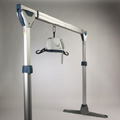
EasyTrack FS Hoist
The EasyTrack FS is a free standing, versatile solution for all types of point to point transfers - wheelchair to bed, bed to chair, even in the bathroom, anywhere there is a lift and transfer need.
The EasyTrack FS has a safe working load of 440 pounds or 200 kilograms which is exceptional for a portable product and the optional protective carrying bags make the system easy to transport.
The FS system includes an extendable rail, 2 telescoping posts and 2 foot plates.
The EasyTrack FS has a safe working load of 440 pounds or 200 kilograms which is exceptional for a portable product and the optional protective carrying bags make the system easy to transport.
The FS system includes an extendable rail, 2 telescoping posts and 2 foot plates.
 Click to view Easytrack FS video
Tuesday, December 12, 2006
Tories launch website forum for disabled people
The Conservative party have recently launched a new website forum to get feedback from disabled people on the issues that effect their lives.
As you may know David Cameron is the parent of a small child with epilepsy and cerebral palsy. If he is elected Prime Minister it could well be the case that issues regarding disability will receive a higher profile than ever before in the corridors of power. This could be a good chance to get your views across to the policy makers of the future.
As you may know David Cameron is the parent of a small child with epilepsy and cerebral palsy. If he is elected Prime Minister it could well be the case that issues regarding disability will receive a higher profile than ever before in the corridors of power. This could be a good chance to get your views across to the policy makers of the future.
Monday, December 11, 2006
Disabled access to town hall row
A DISABLED woman says she was "made to feel like a leper" when she went to Bournemouth Town Hall for her granddaughter's register office wedding.
Wheelchair user Maureen Hayes, 76, is now calling on the council to do something about access, facilities, and disability awareness training for staff.
"The whole thing was unwelcoming and not something I would recommend," said Mrs Hayes, of Southbourne.
After having to go into the building through a back door via a steep ramp, Mrs Hayes needed to use the toilet. She claims the member of staff on duty was unsure where the disabled facilities were located: they turned out to be in an annexe reached by going back outside.
Access to the room where the ceremony was being held was up four steps. Mrs Hayes says the member of staff did not know how to operate the stairlift and suggested men from the wedding party could carry the wheelchair.
After the ceremony, Mrs Hayes claims staff closed the back entrance, assuming that her taxi driver could get her and her chair down the front steps. She was escorted to a lift, but it took another 15 minutes for the member of staff to find an alternative way out of the building.
"How dare Bournemouth Town Hall expect disabled people to have this sort of reception? I accept that it's a listed building, but there's no reason why one side of the steps at the front couldn't be made into a ramp," said Mrs Hayes.
"We're not asking for red carpets, we're asking for the opportunity to live our lives freely. They are discriminating. Had I been a more timid person, it could have wrecked my day."
Helen Rigg, registration and coroner's service manager for the council, said: "We are currently examining ways to improve accessibility to the Town Hall for all people and would like to apologise to Mrs Hayes that her recent visit fell short of her expectations.
"Unfortunately accessibility is limited by the fabric of the old Town Hall building. People who use wheelchairs currently need to use the rear entrance and accessible toilet facilities are in the Town Hall extension."
This article appeared on http://www.thisisdorset.net
Wheelchair user Maureen Hayes, 76, is now calling on the council to do something about access, facilities, and disability awareness training for staff.
"The whole thing was unwelcoming and not something I would recommend," said Mrs Hayes, of Southbourne.
After having to go into the building through a back door via a steep ramp, Mrs Hayes needed to use the toilet. She claims the member of staff on duty was unsure where the disabled facilities were located: they turned out to be in an annexe reached by going back outside.
Access to the room where the ceremony was being held was up four steps. Mrs Hayes says the member of staff did not know how to operate the stairlift and suggested men from the wedding party could carry the wheelchair.
After the ceremony, Mrs Hayes claims staff closed the back entrance, assuming that her taxi driver could get her and her chair down the front steps. She was escorted to a lift, but it took another 15 minutes for the member of staff to find an alternative way out of the building.
"How dare Bournemouth Town Hall expect disabled people to have this sort of reception? I accept that it's a listed building, but there's no reason why one side of the steps at the front couldn't be made into a ramp," said Mrs Hayes.
"We're not asking for red carpets, we're asking for the opportunity to live our lives freely. They are discriminating. Had I been a more timid person, it could have wrecked my day."
Helen Rigg, registration and coroner's service manager for the council, said: "We are currently examining ways to improve accessibility to the Town Hall for all people and would like to apologise to Mrs Hayes that her recent visit fell short of her expectations.
"Unfortunately accessibility is limited by the fabric of the old Town Hall building. People who use wheelchairs currently need to use the rear entrance and accessible toilet facilities are in the Town Hall extension."
This article appeared on http://www.thisisdorset.net
Tuesday, December 05, 2006
Gemini Ceiling Hoist Track Fixings 185 Kgs
Track Fixings all BZP
10mm x 100mm coach screws minimum of four.
10mm studding minimum of four with 10mm Nylocs.
Maximum track fixing centres:- 1250mm.
Minimum curve radius:- 600mm.
Maximum track cantilever:- 150mm.
Maximum uni-strut fixing centres:- 500mm.
Fixing over roof joists (inc gang nailed trusses)
Supporting Unistrut 40mm x 40mm spanning 6 trusses.
Note:- Additional ceiling reinforcement may be required depending on roof construction. This will be advised by the Representative/Agent.
Fixing into first floor joists
*Minimum joist size:- 200mm x 50mm. Maximum span 3.0 metres.
Joist centres:- 400mm
*(Calculations based on centre point of joist fixing)
Joist centres:- 400mm.
Wall to wall fixings
Maximum length of braced track:- 4000mm.
10mm x 100mm coach screws minimum of four.
10mm studding minimum of four with 10mm Nylocs.
Maximum track fixing centres:- 1250mm.
Minimum curve radius:- 600mm.
Maximum track cantilever:- 150mm.
Maximum uni-strut fixing centres:- 500mm.
Fixing over roof joists (inc gang nailed trusses)
Supporting Unistrut 40mm x 40mm spanning 6 trusses.
Note:- Additional ceiling reinforcement may be required depending on roof construction. This will be advised by the Representative/Agent.
Fixing into first floor joists
*Minimum joist size:- 200mm x 50mm. Maximum span 3.0 metres.
Joist centres:- 400mm
*(Calculations based on centre point of joist fixing)
Joist centres:- 400mm.
Wall to wall fixings
Maximum length of braced track:- 4000mm.
Monday, December 04, 2006
Gemini Ceiling Hoist Track Fixings 125 Kgs
Track Fixings all BZP
8mm x 100mm coach screws minimum of four.
10mm studding minimum of four with 10mm Nylocs.
Maximum track fixing centres:- 1250mm.
Minimum curve radius:- 600mm.
Maximum track cantilever:- 150mm.
Maximum uni-strut fixing centres:- 50mm. (On Joists).
Fixing over roof joists (inc gang nailed trusses)
Supporting Unistrut 40mm x 40mm spanning 4 trusses.
Note:- Additional ceiling reinforcement may be required depending on roof construction. This will be advised by the Representative/Agent.
Fixing into first floor joists
*Minimum joist size:- 150mm x 50mm. Maximum span 3.0 metres.
*Joist size:- 200mm x 50mm. Maximum span 5.0 metres.
*(Calculations based on centre point of joist fixing)
Joist centres:- 400mm.
Wall to wall fixings
Maximum length of braced track:- 5000mm.
8mm x 100mm coach screws minimum of four.
10mm studding minimum of four with 10mm Nylocs.
Maximum track fixing centres:- 1250mm.
Minimum curve radius:- 600mm.
Maximum track cantilever:- 150mm.
Maximum uni-strut fixing centres:- 50mm. (On Joists).
Fixing over roof joists (inc gang nailed trusses)
Supporting Unistrut 40mm x 40mm spanning 4 trusses.
Note:- Additional ceiling reinforcement may be required depending on roof construction. This will be advised by the Representative/Agent.
Fixing into first floor joists
*Minimum joist size:- 150mm x 50mm. Maximum span 3.0 metres.
*Joist size:- 200mm x 50mm. Maximum span 5.0 metres.
*(Calculations based on centre point of joist fixing)
Joist centres:- 400mm.
Wall to wall fixings
Maximum length of braced track:- 5000mm.
Friday, December 01, 2006
BHM Medical
BHM Medical Inc. has been providing solutions for the elderly, disabled and the organizations or facilities that serve them for over 10 years. Through feedback from caregivers and those who use the lifts, BHM has been able to design some of the best patient transfer systems on the market today. An award-winning Research and Development department continues to improve and develop products that are exported to their team of distributors worldwide.
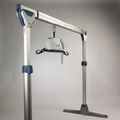
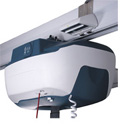
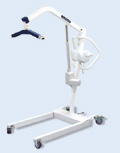
Dolphin are delighted to have reached an agreement with BHM to supply a range of their products which will be a fantastic addition to our product portfolio. Click the following links for more information.
Naidex 2007
Naidex is the UKs largest homecare, disability and rehabilitation exhibition - aimed at healthcare professionals (occupational therapists, physiotherapists, nurses & carers), dealers & distributors, social services workers, care home owners & managers and members of the public who have a disability.
No other event in the UK attracts so many healthcare professionals on such a large scale - 10,418 visitors attended Naidex 2006.
The exhibition is supported by The Disabled Living Foundation, The British Healthcare Trade Association, The College of Occupational Therapists, The English Community Care Association and Therapy Weekly. More information regarding feature areas at the show can be found at www.naidex.co.uk
No other event in the UK attracts so many healthcare professionals on such a large scale - 10,418 visitors attended Naidex 2006.
The exhibition is supported by The Disabled Living Foundation, The British Healthcare Trade Association, The College of Occupational Therapists, The English Community Care Association and Therapy Weekly. More information regarding feature areas at the show can be found at www.naidex.co.uk
Thursday, November 16, 2006
Independent Living London closes
The following post is a press release from Emap Public Sector regarding the future of Indepndent Living London, or rather the lack of it.
Independent Living London closes to make way for new initiatives at Naidex
Press Release
October 12, 2006
Emap Public Sector has reluctantly announced the closure of Independent Living London - the South East's leading disability event.
The attendance for last month's show at Alexandra Palace dipped below 3,500, despite a huge effort made to improve access at the only venue in London that is suitable for staging such an event.
Two factors lie behind Emap's decision to close the London show; the fall in visitors since 2003 when it still took place at Wembley, and a drop in the volume of exhibitors, which has also diminished since 2004. In 2003 Independent Living London attracted more than 5000 visitors but the following year, while Naidex was increasing by more than 2000 visitors numbers fell by 7 per cent.
"A big effort has been made to try and make Independent Living London work but unfortunately we have to admit that it is no longer a crucial date in the diaries of health and social services professionals and for dealers," said Fraser Murdoch, Emap Group Publishing Director.
Last month's event still generated many 'positives' and Fraser added: "Naidex is already firmly established as the national show and our challenge now is to make that even more of a key event, especially for OTs and dealers from the south-east.
"We intend to explore the options for discounted, subsidised and sponsored travel packages to and from the NEC when that show takes place in April.
"Anyone who saw the moving & handling or Canine Partners demonstrations at Independent Living London, or the packed open-air seminars, will agree that those formats need to be adopted and extended at Naidex.
"Also, rather than simply running a CPD clinic at Naidex, as we have for the last three years, we will look at embedding CPD across all areas of the show, working, if we can, with the Department of Health to really make this happen in an imaginative and compelling way."
There are also plans to re-introduce exhibitor and visitor advisory boards this year so members can help to decide the shape of Naidex 2007.
The closure of Independent Living London will have no affect on Independent Living Scotland, the key deliverer of supplier products and services to the health and social services and trade market, which will take place at the SECC from March 28-29. More information is available at www.independentlivingscotland.co.uk.
Independent Living London closes to make way for new initiatives at Naidex
Press Release
October 12, 2006
Emap Public Sector has reluctantly announced the closure of Independent Living London - the South East's leading disability event.
The attendance for last month's show at Alexandra Palace dipped below 3,500, despite a huge effort made to improve access at the only venue in London that is suitable for staging such an event.
Two factors lie behind Emap's decision to close the London show; the fall in visitors since 2003 when it still took place at Wembley, and a drop in the volume of exhibitors, which has also diminished since 2004. In 2003 Independent Living London attracted more than 5000 visitors but the following year, while Naidex was increasing by more than 2000 visitors numbers fell by 7 per cent.
"A big effort has been made to try and make Independent Living London work but unfortunately we have to admit that it is no longer a crucial date in the diaries of health and social services professionals and for dealers," said Fraser Murdoch, Emap Group Publishing Director.
Last month's event still generated many 'positives' and Fraser added: "Naidex is already firmly established as the national show and our challenge now is to make that even more of a key event, especially for OTs and dealers from the south-east.
"We intend to explore the options for discounted, subsidised and sponsored travel packages to and from the NEC when that show takes place in April.
"Anyone who saw the moving & handling or Canine Partners demonstrations at Independent Living London, or the packed open-air seminars, will agree that those formats need to be adopted and extended at Naidex.
"Also, rather than simply running a CPD clinic at Naidex, as we have for the last three years, we will look at embedding CPD across all areas of the show, working, if we can, with the Department of Health to really make this happen in an imaginative and compelling way."
There are also plans to re-introduce exhibitor and visitor advisory boards this year so members can help to decide the shape of Naidex 2007.
The closure of Independent Living London will have no affect on Independent Living Scotland, the key deliverer of supplier products and services to the health and social services and trade market, which will take place at the SECC from March 28-29. More information is available at www.independentlivingscotland.co.uk.
Wednesday, November 01, 2006
Class 3 Mobility Vehicles
Mobility vehicles are classified into 3 categories by the Highways agency.
Class 1 Vehicles: Manual wheelchairs (chairs without an electric motor)
Class 2 Vehicles: Powered wheelchairs and mobility scooters for use on pavements and to cross roads. Maximum speed 4 miles per hour.
Class 3 Vehicles: Powered wheelchairs and mobility scooters for use on roads and pavements. Maximum speed 8 miles per hour.
Owners of Class 3 vehicles do not have to hold a current driving licence. However you do have to drive in accordance with the highway code. Your eyesight must comply with the relevant regulations and you can't drive under the influence of alcohol for obvious reasons.
Class 3 vehicles cannot be used on motorways, bus lanes or cycle lanes and although legally entitled to be used on dual carriageways it is not a good idea. You would feel very small, very slow and very vulnerable if you tried it. If you absolutely had to use a dual carriageway the vehicle must be fitted with a flashing beacon style light to make other road users more aware of your prescence.
Lights, rear view mirrors, rear reflectors, indicators and a horn are all required by law if you intend to use your scooter on the road. All class 3 vehicles must have a speed selector as the legal speed for using the scooter on the pavement is 4mph or 6.4kph which is half of the speed of a class 3 scooter. This is done by means of a speed dial on the tiller or a switch to halve the maximum speed.
Class 1 Vehicles: Manual wheelchairs (chairs without an electric motor)
Class 2 Vehicles: Powered wheelchairs and mobility scooters for use on pavements and to cross roads. Maximum speed 4 miles per hour.
Class 3 Vehicles: Powered wheelchairs and mobility scooters for use on roads and pavements. Maximum speed 8 miles per hour.
Owners of Class 3 vehicles do not have to hold a current driving licence. However you do have to drive in accordance with the highway code. Your eyesight must comply with the relevant regulations and you can't drive under the influence of alcohol for obvious reasons.
Class 3 vehicles cannot be used on motorways, bus lanes or cycle lanes and although legally entitled to be used on dual carriageways it is not a good idea. You would feel very small, very slow and very vulnerable if you tried it. If you absolutely had to use a dual carriageway the vehicle must be fitted with a flashing beacon style light to make other road users more aware of your prescence.
Lights, rear view mirrors, rear reflectors, indicators and a horn are all required by law if you intend to use your scooter on the road. All class 3 vehicles must have a speed selector as the legal speed for using the scooter on the pavement is 4mph or 6.4kph which is half of the speed of a class 3 scooter. This is done by means of a speed dial on the tiller or a switch to halve the maximum speed.
Tuesday, October 31, 2006
Time to Get Equal: Disablism
Scope believes that the UK's 11 million disabled people should have the same rights and opportunities as everyone else. With this in mind they have embarked on the 'Time to get equal' campaign. Log onto their website for more details.
Scope describe Disablism as discriminatory, oppressive or abusive behaviour arising from the belief that disabled people are inferior to others.
Scope describe Disablism as discriminatory, oppressive or abusive behaviour arising from the belief that disabled people are inferior to others.
Friday, October 20, 2006
Are they ripping us off?
Another excellent article from the Disability Now archive. I hear similar stories every day.
Some equipment companies are putting people under extreme pressure to buy, says Rod Hermeston.
Patricia Chubb, 67, has spent the entire amount of an insurance policy she had hoped to use for a holiday on a bathlift she says she cannot use.
A salesman from Nationwide Mobility sold her a Safety Bathe at a special price of £1,295, a £200 reduction which he said was only available that day, she claims.
While she was never able to try out the device in her bath, she claims the salesman said it would be fine after looking at the way she got into the bath.
When the lift arrived she tried to use it but says she realised that it was unsuitable for her. "It kept swinging me to one side. It was unbelievably painful for two or three days afterwards."
But the company told her there was nothing wrong with the lift, she claims.
An occupational therapist (OT) from Bristol social services has since said that the device is inappropriate because of the movements involved in using it.
The company has now offered Ms Chubb an Aquatec Fortuna bathlift instead, worth £895 the company told her. But it sells for around £450 elsewhere. Ms Chubb says she would like her money back.
Jane Madden of Oxford and Josephine Fanning of Didcot also complained to DN about the company. Ms Fanning accuses it of a hard sell which led her to buy a bathing device she feels unable to use. Ms Madden says a salesman tried to persuade her to pay around £400 more than the Aquatec Fortuna cost from another company.
Nationwide Mobility has failed to answer questions from DN despite being contacted on numerous occasions. In a statement it said that if anybody experienced problems with the company's agents or products "we would ask that they contact us directly so we can give the matter our early attention."
This response angered Ms Chubb, who claims she contacted them five times but only made headway when she got the local trading standards department involved.
The British Healthcare Trades Association (BHTA) has a complaints and conciliation scheme and can expel its members. Nationwide Mobility is not a BHTA member.
Unfortunately, experiences like these are not uncommon with other companies selling disability equipment such as scooters, bathlifts and stairlifts through ads in the national press, says Nick Pelling, director of the Disabled Living Foundation (DLF).
Salesmen often work on commission and saying that things are on special offer for one day is a classic tactic, he says. The DLF has received calls from people saying salesmen have even driven them to the bank to withdraw a deposit or encouraged them to lie about their age to get a bank loan.
Maggie Winchcombe, director of the Disabled Living Centres Council (DLCC), is worried about products being sold to people inappropriately.
"The group at risk of making expensive mistakes are those for whom dealing with an impairment is a new experience," she says. They only know about products through ads in the press.
It is important for this group to get impartial information. OTs in disabled living centres can offer that advice, she says.
It may be tempting to grab that "special offer", but Ms Winchcombe warns: "Don't make any commitment or sign anything until you have had time to consider."
There are good reasons for this because if you invite a salesman round, t here is no cooling-off period if you change your mind.
If you pay with a credit card there is a cooling-off period.
Under the Sale of Goods Act, a product must be fit for the purpose for which it is sold, so if a salesman misleads a consumer about what a product can do, the buyer is entitled to a refund.
But you do have to let the firm know that there is a problem within a reasonable time. And if the firm refuses to pay up, you might have to prove that you were misled by them in court, and this is not easy.
You should contact your local council and ask for the trading standards department or you could go to a Citizens Advice Bureau or solicitor.
At the moment there is limited regulation. BHTA has a code of practice and companies adhering to it should bring in an OT if they are uncertain how appropriate a product is.
Things may be set to improve in the sector.
The DLF, DLCC and BHTA are in the early stages of negotiations to set up a new code of practice for all direct selling of disability equipment.
This could involve a quality standards mark which those signing up to the code would carry on their ads. And a body could be set up to deal with complaints.
BHTA director Ray Hodgkinson says: "We hope people will join it to give public confidence. And companies not within it may not get business."
He hopes the Government will back the system.
Meanwhile, it is essential for people to seek unbiased information. The DLF can advise on equipment and suppliers.
The DLCC can give details of your nearest disabled living centre where you can try out equipment and get free advice.
It is a minefield, but with care you can avoid getting blown up.
Pressurised into handing money over:
In February 2000 Josephine Fanning, 76, of Didcot, had a Bath Bubble bathing aid demonstrated by a Nationwide Mobility rep. Ms Fanning, who has arthritis, claims when she asked for time to think the salesman got cross, saying he wouldn't come back to the area to waste his time. She says she bought the device for £595 because she felt under pressure. But she found the buttons hard to press and, on one occasion when she used it, she slipped off it.
Her son George Fanning was furious when he found out in August. He contacted Nationwide Mobility in September but claims they ignored his calls until he threatened to go to the press and his local MP in January this year.
The company has offered another product, but he has insisted it is tried out in the presence of an OT.
DLF helpline, tel: 0845 130 9177.
DLCC, tel: 0161 834 1044.
BHTA, tel: 01732 458868.
www.tradingstandards.gov.uk.
E-mail your experiences to DN: editor@disabilitynow.org.uk.
Some equipment companies are putting people under extreme pressure to buy, says Rod Hermeston.
Patricia Chubb, 67, has spent the entire amount of an insurance policy she had hoped to use for a holiday on a bathlift she says she cannot use.
A salesman from Nationwide Mobility sold her a Safety Bathe at a special price of £1,295, a £200 reduction which he said was only available that day, she claims.
While she was never able to try out the device in her bath, she claims the salesman said it would be fine after looking at the way she got into the bath.
When the lift arrived she tried to use it but says she realised that it was unsuitable for her. "It kept swinging me to one side. It was unbelievably painful for two or three days afterwards."
But the company told her there was nothing wrong with the lift, she claims.
An occupational therapist (OT) from Bristol social services has since said that the device is inappropriate because of the movements involved in using it.
The company has now offered Ms Chubb an Aquatec Fortuna bathlift instead, worth £895 the company told her. But it sells for around £450 elsewhere. Ms Chubb says she would like her money back.
Jane Madden of Oxford and Josephine Fanning of Didcot also complained to DN about the company. Ms Fanning accuses it of a hard sell which led her to buy a bathing device she feels unable to use. Ms Madden says a salesman tried to persuade her to pay around £400 more than the Aquatec Fortuna cost from another company.
Nationwide Mobility has failed to answer questions from DN despite being contacted on numerous occasions. In a statement it said that if anybody experienced problems with the company's agents or products "we would ask that they contact us directly so we can give the matter our early attention."
This response angered Ms Chubb, who claims she contacted them five times but only made headway when she got the local trading standards department involved.
The British Healthcare Trades Association (BHTA) has a complaints and conciliation scheme and can expel its members. Nationwide Mobility is not a BHTA member.
Unfortunately, experiences like these are not uncommon with other companies selling disability equipment such as scooters, bathlifts and stairlifts through ads in the national press, says Nick Pelling, director of the Disabled Living Foundation (DLF).
Salesmen often work on commission and saying that things are on special offer for one day is a classic tactic, he says. The DLF has received calls from people saying salesmen have even driven them to the bank to withdraw a deposit or encouraged them to lie about their age to get a bank loan.
Maggie Winchcombe, director of the Disabled Living Centres Council (DLCC), is worried about products being sold to people inappropriately.
"The group at risk of making expensive mistakes are those for whom dealing with an impairment is a new experience," she says. They only know about products through ads in the press.
It is important for this group to get impartial information. OTs in disabled living centres can offer that advice, she says.
It may be tempting to grab that "special offer", but Ms Winchcombe warns: "Don't make any commitment or sign anything until you have had time to consider."
There are good reasons for this because if you invite a salesman round, t here is no cooling-off period if you change your mind.
If you pay with a credit card there is a cooling-off period.
Under the Sale of Goods Act, a product must be fit for the purpose for which it is sold, so if a salesman misleads a consumer about what a product can do, the buyer is entitled to a refund.
But you do have to let the firm know that there is a problem within a reasonable time. And if the firm refuses to pay up, you might have to prove that you were misled by them in court, and this is not easy.
You should contact your local council and ask for the trading standards department or you could go to a Citizens Advice Bureau or solicitor.
At the moment there is limited regulation. BHTA has a code of practice and companies adhering to it should bring in an OT if they are uncertain how appropriate a product is.
Things may be set to improve in the sector.
The DLF, DLCC and BHTA are in the early stages of negotiations to set up a new code of practice for all direct selling of disability equipment.
This could involve a quality standards mark which those signing up to the code would carry on their ads. And a body could be set up to deal with complaints.
BHTA director Ray Hodgkinson says: "We hope people will join it to give public confidence. And companies not within it may not get business."
He hopes the Government will back the system.
Meanwhile, it is essential for people to seek unbiased information. The DLF can advise on equipment and suppliers.
The DLCC can give details of your nearest disabled living centre where you can try out equipment and get free advice.
It is a minefield, but with care you can avoid getting blown up.
Pressurised into handing money over:
In February 2000 Josephine Fanning, 76, of Didcot, had a Bath Bubble bathing aid demonstrated by a Nationwide Mobility rep. Ms Fanning, who has arthritis, claims when she asked for time to think the salesman got cross, saying he wouldn't come back to the area to waste his time. She says she bought the device for £595 because she felt under pressure. But she found the buttons hard to press and, on one occasion when she used it, she slipped off it.
Her son George Fanning was furious when he found out in August. He contacted Nationwide Mobility in September but claims they ignored his calls until he threatened to go to the press and his local MP in January this year.
The company has offered another product, but he has insisted it is tried out in the presence of an OT.
DLF helpline, tel: 0845 130 9177.
DLCC, tel: 0161 834 1044.
BHTA, tel: 01732 458868.
www.tradingstandards.gov.uk.
E-mail your experiences to DN: editor@disabilitynow.org.uk.
Subscribe to:
Posts (Atom)